The Gentlest of Voices: An Evening with Bedouine
Written by DJ Phoenix / Journeys: Beirut & Beyond / Thursdays at 12 pm
On Saturday, October 17, I made my way from Riverside to South Pasadena to experience two firsts: seeing a show at the recently opened Sid The Cat Auditorium, and catching the artist Bedouine in a live concert. Bedouine (Azniv Korkejian) is an incredible Syrian-born American folk singer-songwriter of Armenian descent whose music I sometimes play on my radio show Journeys: Beirut & Beyond, and who has recently self-released her fourth studio album, Neon Summer Skin.
It’s worth sharing a little about the venue’s significance. Sid the Cat is an indie concert-promoting agency founded around 2015 in the LA area that quickly made a reputation for itself by showcasing incredible up-and-coming and mid-career bands in historic and unorthodox spaces, before finally opening its first permanent concert hall in South Pasadena, in a restored 1931 elementary school building.
I arrived early and was pleasantly surprised by the chilled-out and welcoming vibes of the venue’s layout and staff. I got to chat with Bedouine’s manager, Jonathan Pearsons, before the show. It’s then that I found out (to my disappointment) that the opening act Le Ren couldn’t make it from Canada because of visa issues, a small reminder of the fraught immigration climate currently smothering many communities in this country.
So in lieu of Le Ren, the two-piece band Sylvie, led by Ben Schwab, provided a short opening set with two acoustic guitars and lighthearted folk songs. The crowd in the space enjoyed the performance, but not enough to ask for an encore, probably because of their eagerness to see Bedouine.
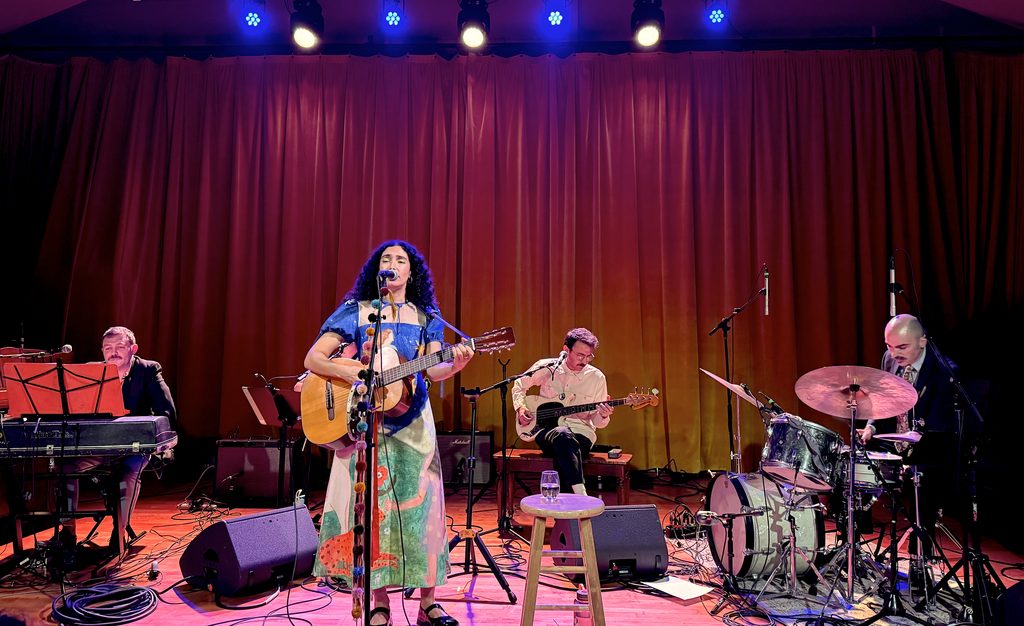
After a short wait that felt longer than it was, she finally appeared, alone, to the cheers of the auditorium, which had filled up with more people during the intermission. Azniv was wearing an enchanting dress with a painterly print filled with soft blues and vibrant greens, portraying lush flora, wildlife, and the sweeping outlines of two female figures, one holding a star, and the other a flower. She carried a nylon-string acoustic guitar as she walked to the microphone stand at the front of the stage. “Let’s ease right in,” she said softly, and opened the show with the song “Bird.” An incredible silence fell over the room as her classical guitar and serene voice resonated alongside immaculate fingerpicking. The sound in the hall was perfect.
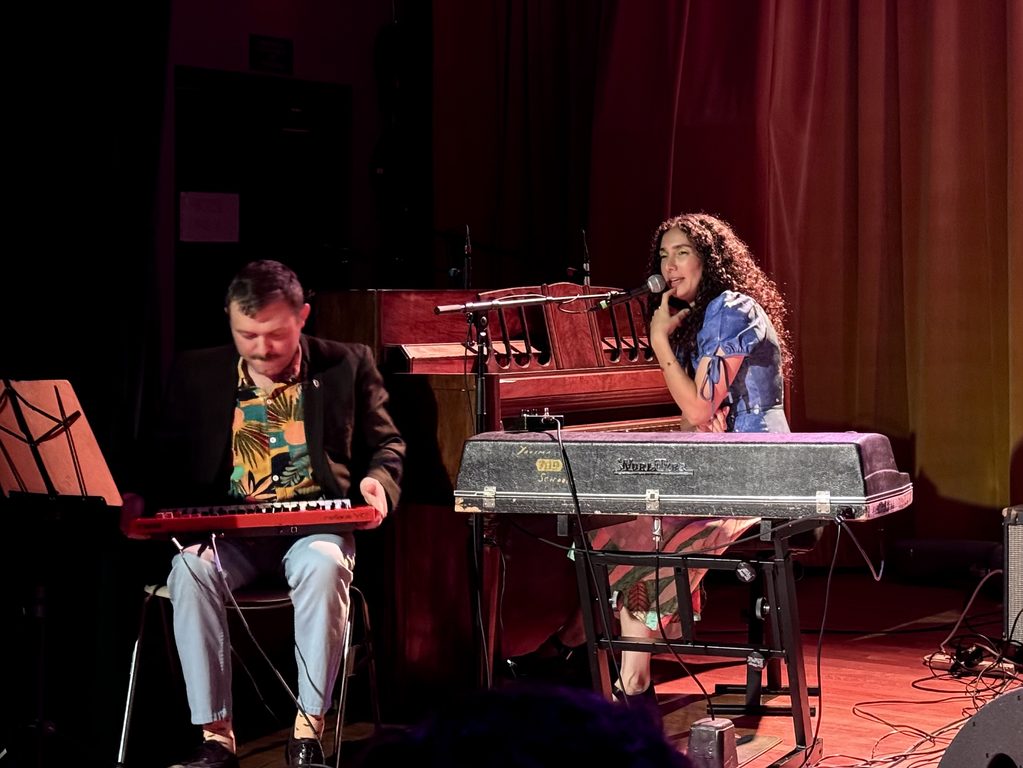
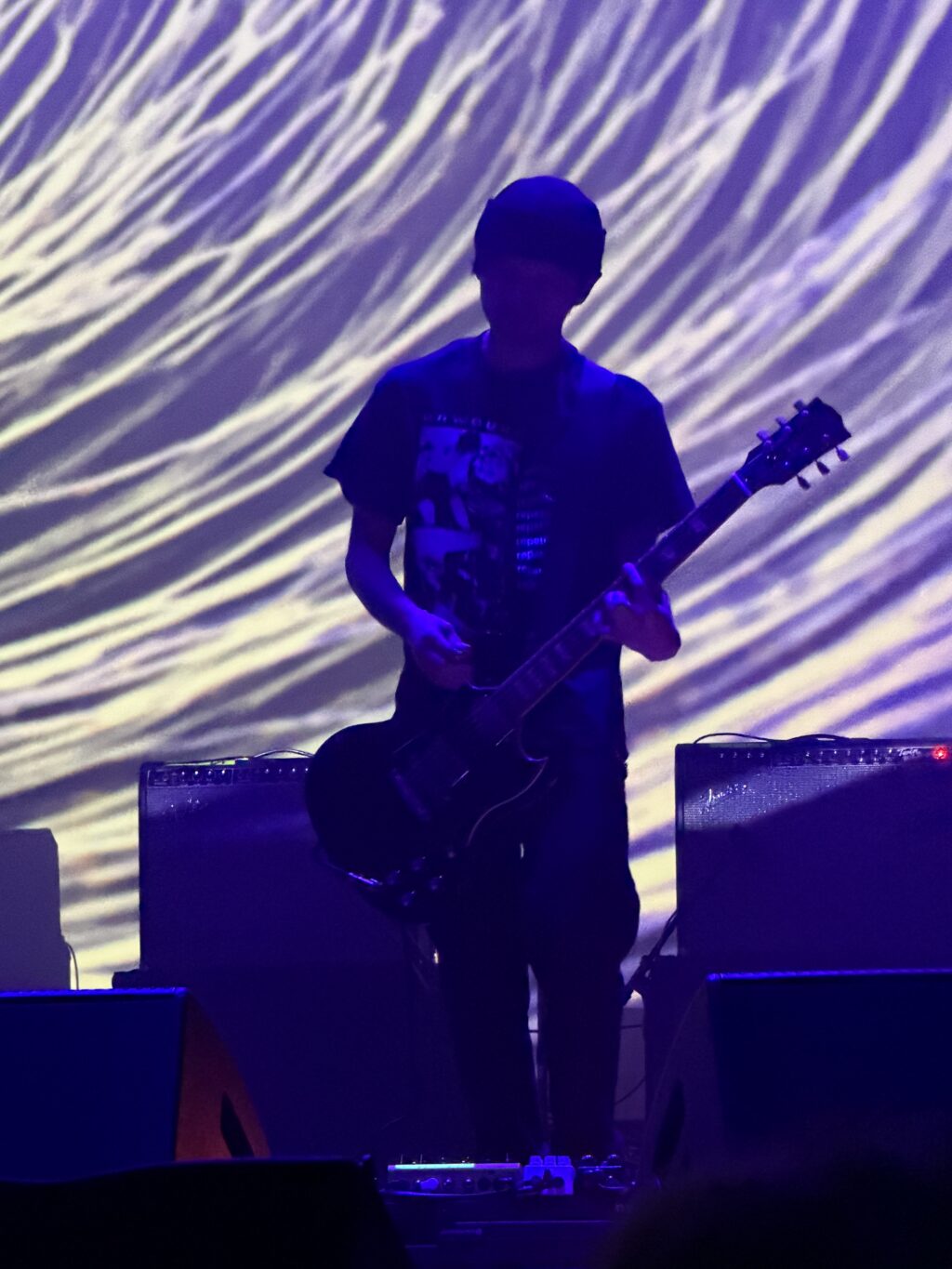
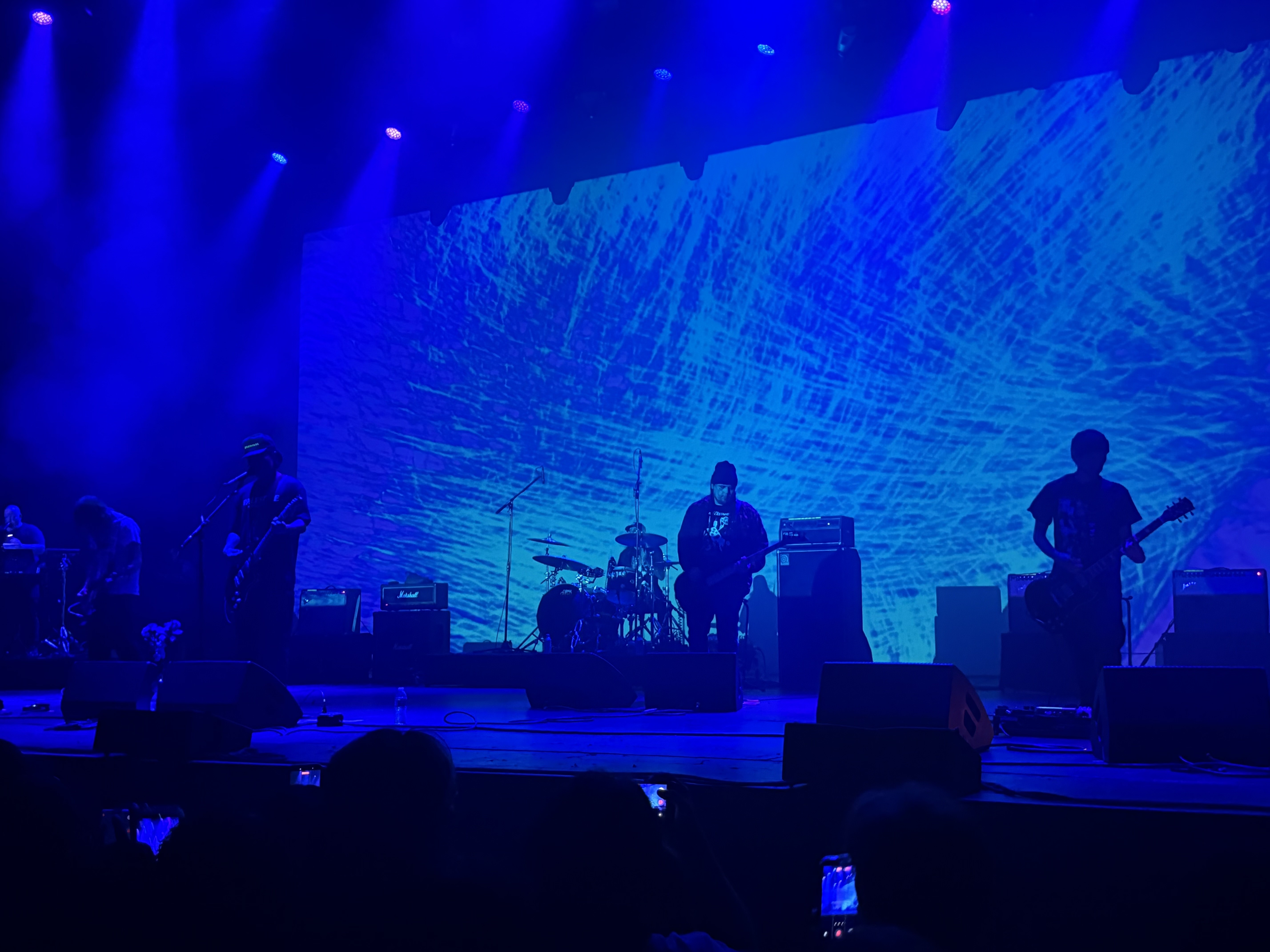
For her second song, she was joined on stage by bassist Aaron Olson. They performed a stripped-down version of “Sunshine Sometimes” with Aaron contributing backing vocals. After these two songs from her 2019 album Bird Songs of a Killjoy, Azniv and Aaron were joined by two more musicians: Andrew Dorsett on synth and Wurlitzer, and Adron on backing vocals (and later in the show, on guitars). They played “Solitary Daughter” from the 2017 eponymous album Bedouine. Azniv started with a speaking-singing voice, followed by guitar and bass. People in the audience gently swayed heads and shoulders. Two women in the front somehow found a way to headbang to this mellowest of songs. They caught Azniv’s attention and she asked, “Am I metal?!” as the audience laughed. After “Solitary Daughter,” the drummer, Robin MacMillan, joined and the full formation of the band Other Delights was finally on stage as they kicked off another song off the self-titled album, probably my favorite one: “Nice and Quiet.” Between Azniv’s dreamy voice, Adron’s melodious electric guitar licks, and Robin’s smooth brush drumming, I was captivated. I was swaying and swinging so intently that I considered headbanging for that one.
After these lovely renditions of old favorites, it was time for Bedouine to perform her new album, Neon Summer Skin, in its entirety.
The album opened with “On My Own,” and Azniv opened with a small tambourine as Andrew moved from synth to piano. The song gradually built up with drums, piano, and Adron’s electric guitar, alternating between intense full-band passages and quieter verses carried by Azniv’s voice and guitar. During the last chorus, the stage lights shone like a sunrise, beautifully complementing the music. The bridge then darkened into a passage of voice and synth before the piano and full band returned. Just when the audience thought the song had ended and began applauding, the music swelled into an outro, with Robin adding the delicate sound of a shaker. More applause followed.
“Long Way to Fall” began with an atmospheric introduction of synth, guitars, and bass, before giving way to Azniv’s voice and classical guitar alone. The piano and bass gradually joined her, adding layers to the song without disturbing its intimacy.
Before “Always on Time,” Azniv shared a reflection about the tendency to compare ourselves to others, suggesting instead that we should compare ourselves to who we were before. It was a simple but thoughtful introduction to a song she performed seated at the piano. Beginning with just her voice and piano, the arrangement expanded to include synth and electric guitar, eventually leading into a lovely instrumental passage with sustained cymbals, a guitar solo, and, unexpectedly, Aaron picking up a harmonica.
For “One Thing Right,” Azniv stood without her guitar for the first time, singing and gently dancing along to one of the catchiest songs of the evening. Guest musician Logan Hone joined on flute, adding a playful melodic dimension that delighted the audience, who swayed along and cheered enthusiastically for his contribution.
The mood shifted with the album’s title track, “Neon Summer Skin.” Azniv introduced it as a song about painting the portrait of a perfect day, recalling the feeling of safety one experiences as a child. She reflected on how the world has not been a safe place for so many children lately, a sentiment that resonated well beyond the personal memories behind the song, conjuring in my mind the countless Palestinian and Lebanese kids killed by Israel over recent years. The song arrangement began with two guitars and voices, later joined by piano and bass, but no drums. The result was melancholic and haunting, and the auditorium fell into a deep silence.
The theme of childhood and safety continued with “Canopies.” Azniv shared a story from her family history, about how her grandmother had placed her mother in an orphanage on the Lebanese coast to protect her from her abusive father, a painful separation that lasted several years. It was a moving reminder of the difficult choices families sometimes make in the face of circumstances beyond their control. The song was performed with guitar, voice, bass, and Wurlitzer, again without drums, allowing the story and Azniv’s voice to remain at the center.
After these two emotionally charged songs, the concert took a delightful turn toward bossa nova. Sung in Armenian, “Deghma Cheega” brought a lighter, more playful energy to the stage, with Azniv playing the triangle, whistling, and Adron switching to classical guitar. It was a pleasure to hear how naturally her voice lent itself to these rhythms. The Brazilian influence continued with “Na Na Na,” another bossa nova-inspired song, this time featuring the warm sound of the Wurlitzer. Both songs offered a lovely change of pace, and a reminder of the musical range that Bedouine brings to her folk songwriting.
Before “White Patent Leather,” Azniv shared another remarkable family anecdote. She recalled seeing a photograph from her parents’ wedding in Syria, where a lamb had been sacrificed as part of the celebration. Horrified by the image, she said the experience contributed to her becoming a vegetarian. The song itself was performed with sparse instrumentation, slow drumbeats, and Azniv singing without an instrument. There was something particularly affecting about hearing these intimate stories from her family’s past, and then experiencing how she transforms them into music.
The album performance concluded with a solo piano rendition of “Canopies” by Andrew, returning us to the song’s emotional landscape in an even more intimate setting. Without the accompaniment of the band or Azniv’s voice, the piano brought a different vulnerability to the piece, a fitting conclusion to a set that had moved so effortlessly between personal memories, playful musical explorations, and reflections on the world around us.
Bedouine and the band returned for an encore, beginning with one of her most popular songs from 2017, “One of These Days.” This was the moment when seemingly every phone camera in the auditorium came out, as people rushed to capture a little piece of one of her best-loved songs to take home with them.
For the final song, “Dusty Eyes,” Azniv invited everyone to imagine they were back in high school and encouraged the audience to dance, or better yet, slow dance. Introducing it as a romantic song, she brought the evening to a close on a tender and affectionate note. After all the stories of childhood, longing, and the search for safety, it felt particularly lovely to end the night with an invitation to share a simple moment of closeness.
I left Sid The Cat Auditorium grateful to have finally experienced Bedouine live. There is something extraordinary about Azniv’s ability to hold an audience with the gentlest of voices. The impeccable sound of the venue, the sensitivity of the musicians accompanying her, and the warmth and humor with which she shared her stories made for an evening that was as intimate as it was musically rich.